
February 3-6, 2027, Istanbul Expo Center
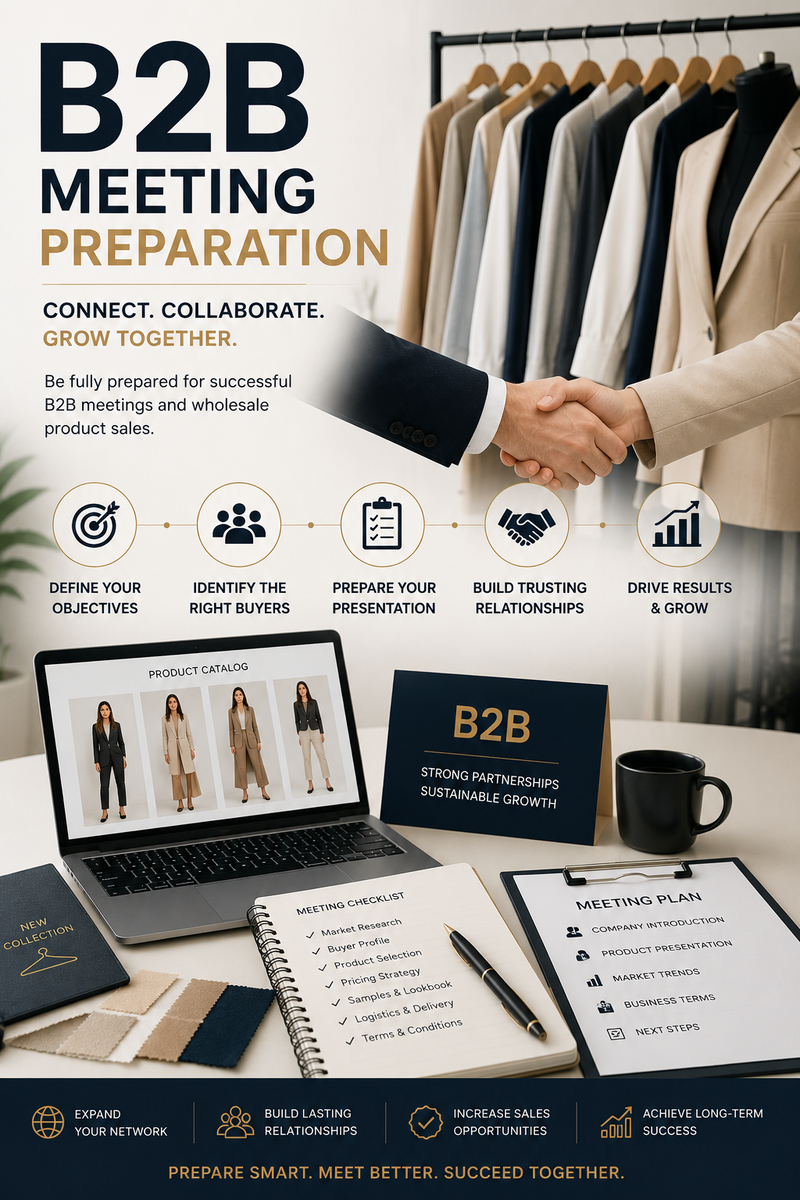
In the competitive world of wholesale, every interaction matters. Whether you are attending a global trade show or hosting a private buyer session, the outcome of your b2b meetings can directly impact your sales pipeline, brand positioning, and long-term partnerships. Unlike casual networking, b2b sales meetings require structure, clarity, and strategic intent.
For businesses operating in wholesale product sales, especially in fast-moving industries like fashion, home textiles, or consumer goods, preparation is not optional—it is a competitive advantage. From setting a clear b2b meeting agenda to delivering a compelling pitch, every step must be aligned with your sales goals.
Preparation defines success in any b2b meeting, but in wholesale trade environments, the stakes are even higher. Buyers often have limited time, multiple appointments, and clear expectations.
A well-prepared approach allows you to communicate your value proposition clearly, stand out among competing suppliers, and build trust within minutes. Without preparation, even the most innovative products can fail to make an impact. A structured b2b sales meeting ensures that you deliver the right message to the right audience at the right time.
Effective planning begins long before the event. Successful companies treat b2b meetings as a process rather than a one-time interaction.
Start by defining your objectives. Are you aiming to secure bulk orders, find distributors, or build brand awareness? Your goal will shape your entire b2b meeting agenda.
Next, segment your target audience. Not all buyers evaluate products the same way. Some focus on pricing, while others prioritize quality, exclusivity, or sustainability. Aligning your offer with these expectations increases the effectiveness of each b2b sales meeting.
It is also essential to prepare your materials in advance. Product catalogs, pricing structures, sample kits, and delivery timelines should be ready and easy to present. A well-organized preparation phase ensures that your b2b meeting runs smoothly and professionally.
Research is one of the most powerful tools in successful b2b meetings. Entering a b2b sales meeting with detailed knowledge about the buyer transforms your approach from generic to highly targeted.
Before the meeting, analyze the company’s positioning, product categories, and target markets. Understanding their pricing strategy and distribution channels will help you adapt your communication style.
For instance, if a buyer focuses on premium retail, emphasizing quality and brand story will be far more effective than focusing on cost advantages. This level of preparation ensures your b2b meeting feels relevant and valuable from the very beginning.
Communication plays a defining role in the success of any b2b sales meeting. It is not only about presenting products but also about guiding the conversation in a structured and engaging way.
Your presentation should remain clear, concise, and focused on value. Instead of overwhelming buyers with excessive details, highlight how your products meet their needs and support their business goals. A well-planned b2b meeting agenda helps maintain flow and ensures that key points are covered efficiently.
A strong pitch is essential in every b2b meeting, especially in environments where attention spans are limited. Buyers often make quick decisions based on first impressions, so clarity is crucial.
An effective pitch should clearly explain who you are, what you offer, and why your products are relevant. The focus should always remain on the value you bring to the buyer. In a b2b sales meeting, the most impactful pitches are those that connect directly with the buyer’s expectations and challenges.
First impressions can determine the outcome of a b2b meeting within seconds. Professional appearance, confident communication, and strong product knowledge all contribute to building credibility.
Trust is a critical factor in wholesale relationships. Buyers are not just purchasing products; they are selecting long-term partners. A well-executed b2b sales meeting should leave the buyer with confidence in your reliability, consistency, and professionalism.
Trade shows are dynamic environments where multiple b2b meetings take place simultaneously. Managing these interactions effectively requires both structure and flexibility.
While it is important to follow your b2b meeting agenda, you should also be prepared to adapt based on the flow of the conversation. Staying focused, managing distractions, and keeping discussions aligned with your objectives are key to maintaining productive b2b sales meetings.
Time management is one of the most critical aspects of successful b2b meetings at trade shows. Each meeting should be approached with a clear structure and a defined duration.
Keeping conversations concise while covering essential points allows you to meet more potential buyers without compromising quality. A well-managed b2b sales meeting ensures that both parties leave with clear next steps.
The most effective b2b meetings are built on dialogue rather than one-sided presentations. Asking the right questions enables you to understand the buyer’s expectations and tailor your offer accordingly.
Instead of making assumptions, guide the conversation with strategic questions about product preferences, pricing expectations, and order volumes. This approach transforms your b2b sales meeting into a solution-focused discussion and increases the likelihood of conversion.
The conclusion of a b2b meeting is only the beginning of the sales process. Without a structured follow-up strategy, valuable opportunities can easily be lost.
Consistent communication after b2b meetings helps reinforce your message and keeps your brand top of mind. It also allows you to address any additional questions and move the buyer closer to a decision.
A well-crafted follow-up message can significantly influence the outcome of a b2b sales meeting. It should feel personal, relevant, and purposeful.
Referencing specific details discussed during the b2b meeting demonstrates attention and professionalism. Including tailored product suggestions, pricing information, and clear next steps helps maintain momentum and encourages further engagement.
After the event, your focus should shift to converting leads into actual business. This requires a structured and disciplined approach.
Prioritizing high-potential leads, maintaining regular communication, and offering tailored solutions are key elements of successful post-event strategies. Scheduling additional b2b sales meetings or virtual follow-ups can help strengthen relationships and accelerate decision-making.
Attending a major industry platform like Istanbul Fashion Connection (IFCO) provides a valuable opportunity to enhance your b2b meetings and connect with international buyers.
By combining strategic preparation, structured b2b meeting agendas, and consistent follow-up, businesses can transform individual interactions into long-term partnerships.
In today’s competitive landscape, success in b2b sales meetings depends on preparation, execution, and relationship management. Leveraging the right strategies and platforms will position your brand for sustainable growth, especially within a global fashion trade fair environment.